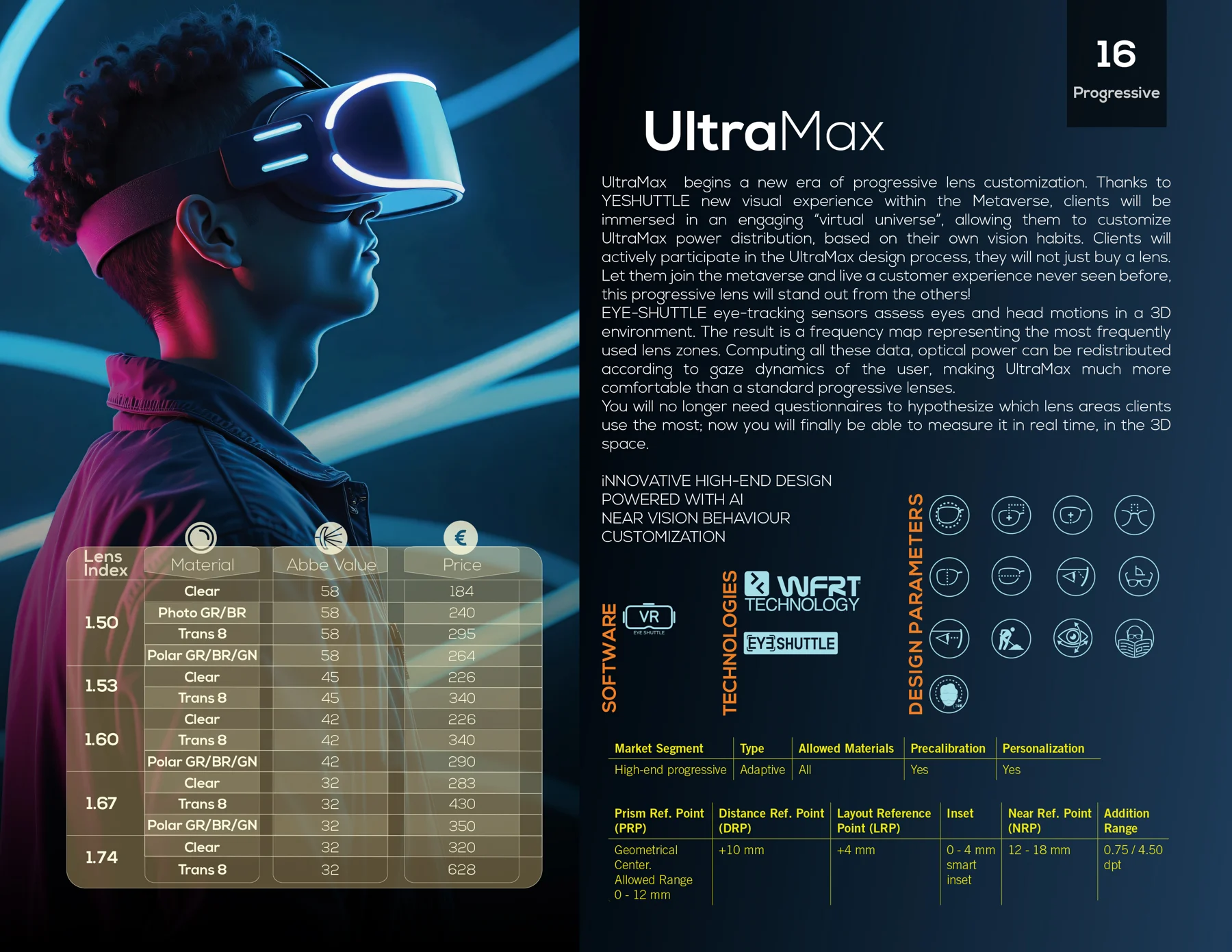
UltraMax Progressive
Progressive design adapted to viewing behaviour
Explore design and specificationsAdaptive distance, intermediate and near design combining DuraTrace, DuraTrack and DuraFit Inset; fitting and viewing-pattern data inform personalisation.
Application and design rationale
A power map adapted to viewing patterns
This model combines DuraTrack viewing-behaviour data with DuraTrace calculations. DuraFit Inset positions the near corridor; individual performance depends on prescription and fitting.
| Design identifier | Description |
|---|---|
| Category | Biometric, advanced adaptive progressive lens |
| Design type | Adaptive |
Technical specifications
Orderable options depend on prescription, material and current product availability.
| Technical parameter | Value / status |
|---|---|
| Product classMarket Segment | High-end progressive |
| Computational technologyCalculation Technology | DuraTrace + DuraTrack |
| Design typeType | Adaptive |
| Available materialsAllowed Materials | All materials |
| Pre-calibrationPrecalibration | Yes |
| PersonalisationPersonalization | Yes |
| Prism reference pointPrism Reference Point (PRP) | Geometrical centre |
| Distance reference pointDistance Reference Point (DRP) | +10 mm |
| Fitting reference pointLayout Reference Point (LRP) | +4 mm |
| InsetInset | 0–4 mm (DuraFit Inset) |
| Near reference pointNear Reference Point (NRP) | 12–18 mm |
| Addition rangeAddition Range | +0.75 to +4.50 D |
| PRP decentration range | 0 to 12 mm |
| Specified indices and options | Indices 1.50, 1.53, 1.60, 1.67 and 1.74 (clear, photochromic, Transitions Gen 8 and polarised); confirm final availability when ordering. |
| Addition step | 0.25 D |
Design mechanism and features
Design based on viewing behaviour
UltraMax Progressive adds eye/head movement data through DuraTrack to DuraTrace calculations, aiming to align viewing-zone distribution with the wearer's gaze pattern.
Difference from SuperMax
SuperMax's description emphasises DuraMesh, DuraCore AI and DuraAperture; UltraMax Progressive's distinguishing input is recorded viewing behaviour. Both tables describe Adaptive, personalised models.
Corridor and inset
The NRP range is 12–18 mm and DuraFit Inset is 0–4 mm. Select values according to frame dimensions, working distance and accurately recorded fitting data.
Technologies in this design
- DuraTrace
- Ray-tracing calculations and optical-aberration optimisation in surface design.
- DuraTrack
- Viewing-behaviour inputs and the ratio of eye to head movement, as described for this model.
- DuraFit Inset
- Near-zone inset adjustment; the model's range appears in its specification table.


Measure before manufacture
Required parameters vary by design and must be recorded by a professional.
- Monocular PD
- Each eye's pupillary distance is recorded separately to align horizontal lens positioning with the visual axis.
- Fitting Height
- Fitting height is recorded on the adjusted frame in the natural position of wear; the required near zone must also fit within the frame.
- BVD
- Distance from the rear lens surface to the corneal apex; relevant to power-compensation calculations in personalised models.
- Pantoscopic Angle
- The frame's vertical tilt in the position of wear must be measured; example values are not substitutes for measurement.
- Wrap Angle
- The horizontal curvature of the frame relative to the face, describing lens positioning.
- Box A
- Horizontal width of the frame opening in the boxing system.
- Box B
- Vertical height of the frame opening in the boxing system.
- DBL
- Distance between the two lens boxes at the frame bridge.
- ED
- Effective diameter: twice the greatest distance from the boxing centre to the lens-shape edge, used for blank selection and edging calculations.
Design-specific inputs
- Eye Movement Ratio / Dynamic Behavior (DuraTrack): analyses eye rotation relative to head rotation to determine corridor width and peripheral-astigmatism distribution.
- Corridor Length / NRP Selection: choose the near-reference depth (12–18 mm) to match frame height and downward gaze range.
- DuraFit Inset (variable 0–4 mm): precise horizontal near-focus displacement according to each eye's biometric convergence and reading distance.
- Working Distance: calibrates the standard working distance to define the power gradient and reading depth.
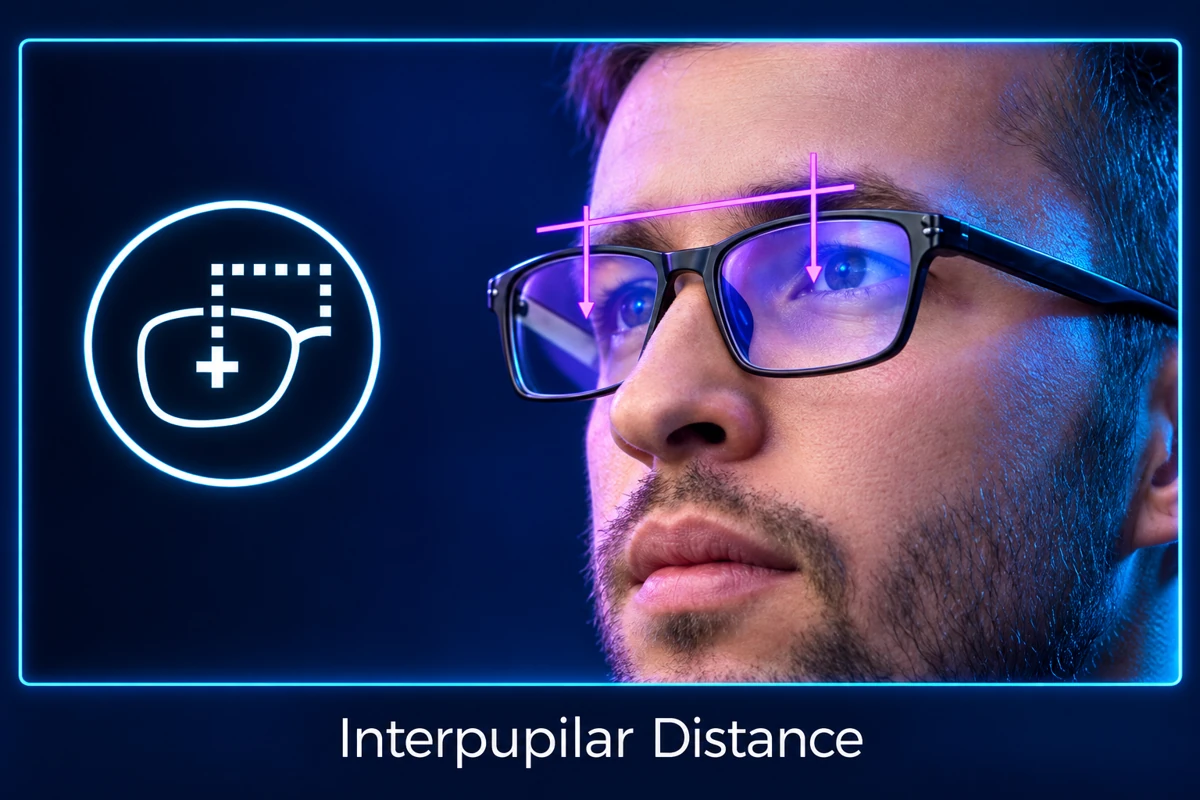
Monocular pupillary distance
For aligning the lens centre with each eye's visual axis.
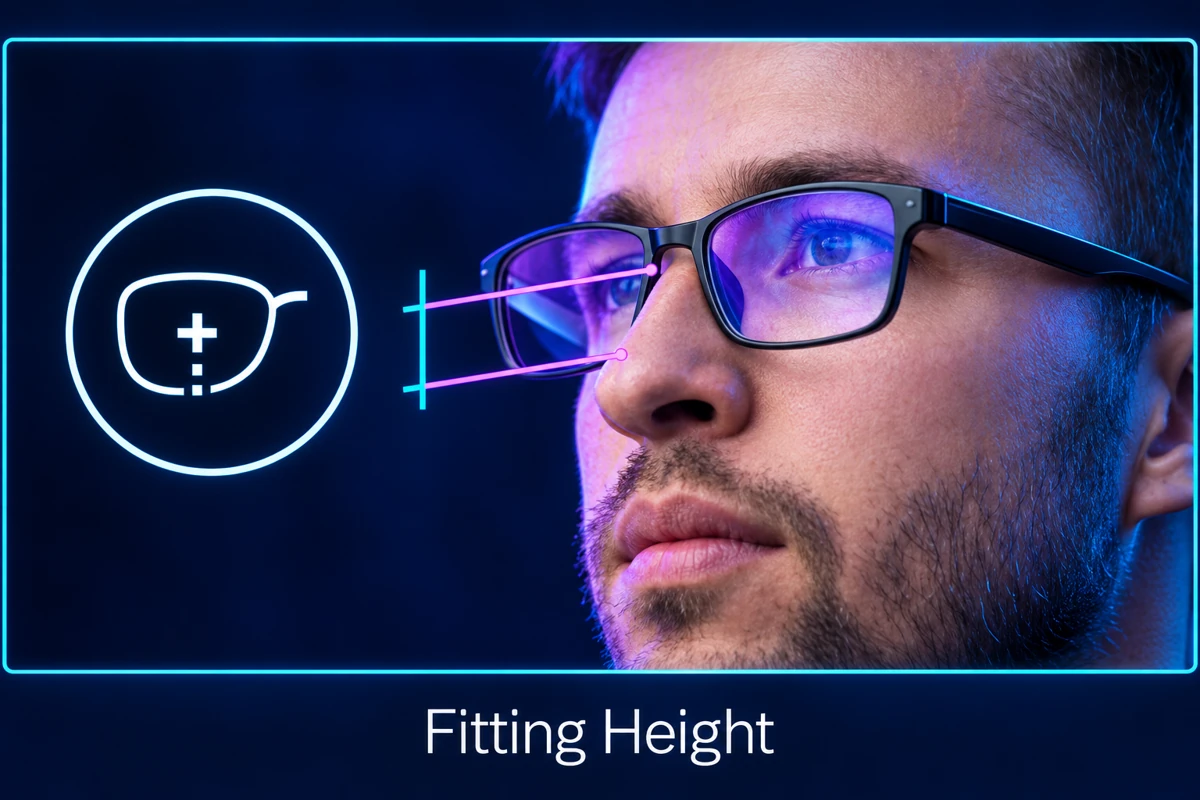
Fitting height
Vertical pupil position relative to the frame in the position of wear.
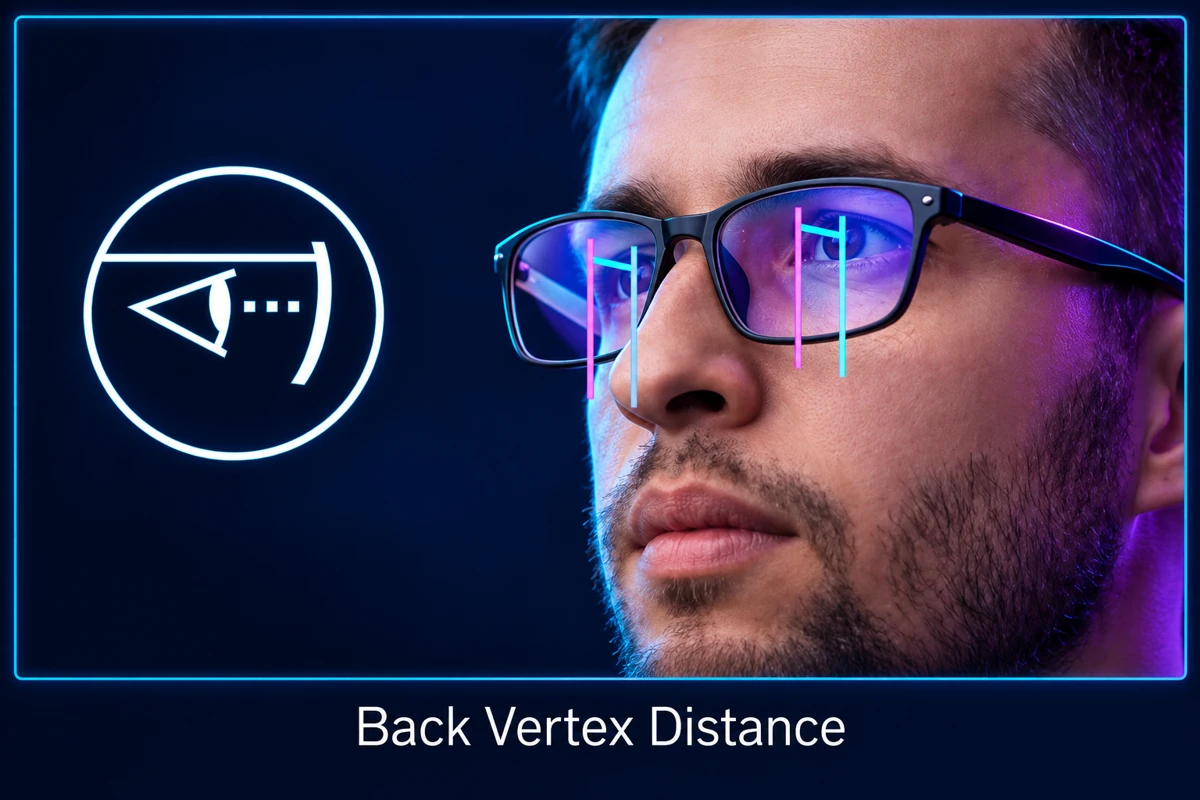
Back vertex distance
One of the inputs describing the actual position of wear.
These are basic fitting parameters; additional inputs and the level of personalisation are specified for each model.
Complete parameter guide ↖View the original catalogue page